Characteristics of a Leader
Characteristics of a Leader
Over the past weeks, I've been immersed in Napoleon Hill's Think and Grow Rich. While the book is often associated with success and personal achievement, one chapter in particular struck a deeper chord - Hill's eleven attributes of effective leadership.
Reading them felt like holding up a mirror to years of real-world lessons learned on shop floors, in boardrooms, and through the guidance of mentors who shaped the leader I am today.
Courage
Hill begins with unwavering courage, a quality I've seen tested countless times. Leadership often means stepping into discomfort - asking the difficult questions, making the call when the data isn't perfect, or standing alone when the team isn't yet convinced. Courage isn't loud; it's steady.
Self-Control
He then speaks of self-control, which I've always viewed as discipline rather than control. Not only the discipline of following through with one's self, but also emotional discipline. This is what keeps a leader centred when the environment isn't. Teams watch how you respond long before they listen to what you say. This is not always easy.
Justice
A keen sense of justice follows - fairness as a non-negotiable. I've always believed in being firm but fair. Situations change, people change, pressures change, but fairness must remain constant. It's the foundation of respect.
Definiteness of Decision and Plans
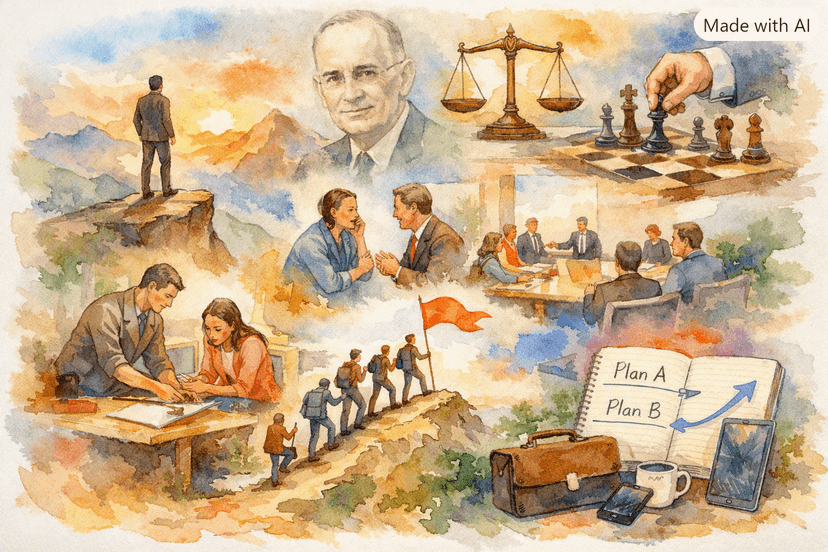
Hill's emphasis on definiteness of decision and definiteness of plans resonates strongly with my own experience. Early in my career, a mentor taught me that it's often better to make a decision and adjust with humility than to fall into decision paralysis. Teams don't rally behind ideas alone; they rally behind leaders who turn ideas into plans and plans into action. And if Plan A fails, the alphabet still has 26 letters.
Doing More Than Paid For
One attribute that has shaped my own leadership philosophy is the habit of doing more than paid for. I once had a director who reminded us that the company phone, laptop, and parking space weren't perks - they were tools. If you expect your team to go the extra mile, you must walk it first.
A Pleasing Personality, Sympathy, and Understanding
Hill also highlights the importance of a pleasing personality, sympathy, and understanding. This isn't about being easy. It's about being someone people can approach, someone who listens, someone who understands why a colleague might be struggling and helps them find their footing again.
Mastery of Detail
Mastery of detail is another timeless truth. You don't need to be the expert in every task, but you must care enough to understand the work. People respect leaders who stay connected to reality, not those who lead from a distance.
Full Responsibility and Cooperation
Finally, Hill speaks of assuming full responsibility and fostering cooperation. One of my former managers used to say, "If you fail, it's on me. If you succeed, it's on you." That mindset builds trust - and trust builds teams.
A Timeless Leadership Practice
These attributes may have been written decades ago, but they remain profoundly relevant. Leadership isn't a title; it's a practice. And like any practice, it demands courage, discipline, humility, and a genuine commitment to others.